
Choosing Local UK Stone: Why Regional Quarries Matter for Matching Older Buildings
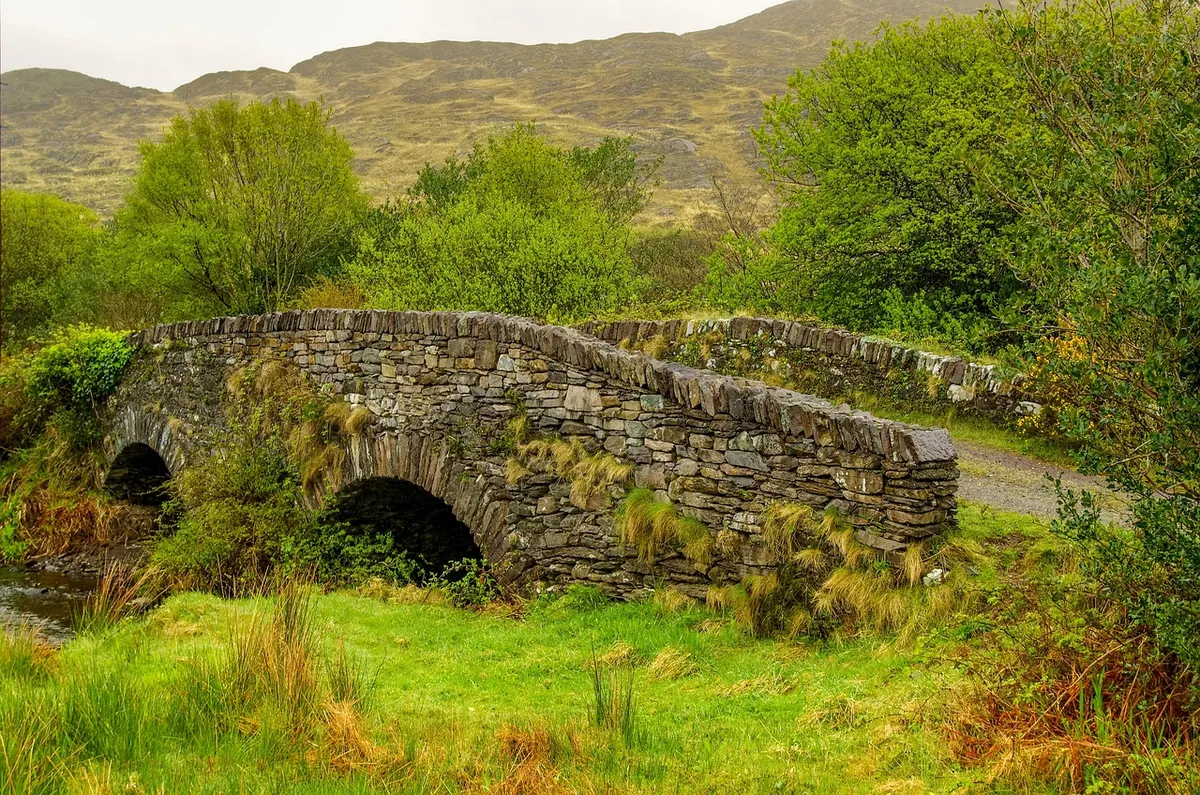
Stone buildings are local by nature. Before railways and cheap road haulage, there was no sense in dragging a few tonnes of rock thirty miles when a quarry sat at the end of the lane. That is why Cotswold villages glow honey-coloured, why Aberdeen sparkles in the rain, and why a Yorkshire street can shift from dark gritstone to pale magnesian limestone within a few hundred yards. None of it was designed. It is geology, and it is the thing you have to match when you repair or extend an older building.
The geology under your feet
Every region of the UK sits on a particular band of rock, and traditional builders worked almost entirely within it. Sedimentary belts give you sandstones and limestones of every shade; igneous areas give granite, basalt and tough volcanic stone; slate belts give roofing and, occasionally, walling. Flint country is different again — chalk with nodular flint, held together with lime mortar.
Two useful things follow from this. First, the stone you need is usually within a few miles, even if the original quarry is long closed, because the geological formation runs for miles in a line. Second, the bed matters as much as the quarry. Many quarries work several beds or seams within the same site, and each one varies in colour, hardness and how it weathers. A quarry that can supply "the same stone" from a different bed may hand you something that looks close on the day and nothing like it in five years.
Colour, texture and grain
Colour in building stone comes largely from trace minerals. Iron oxides give the reds, buffs and browns; organic material leaves limestones and some sandstones grey or blue-grey; the greens and blue-greys of certain sandstones and slates come from slightly different chemistry again. Freshly quarried stone is almost always paler and greyer than the weathered surface on your wall, which is why a sample viewed indoors can be badly misleading.
Texture is the other half of the story. Oolitic limestones show tiny rounded grains, as though the stone were made of fish roe; gritstones show coarse quartz with a rough, almost sugary surface; slates split along a cleavage that leaves an unmistakably flat face. Finishes matter too: a tooled or rubbed face catches light differently from a sawn one, and a riven face reads differently again. A small colour difference with a well-matched finish usually disappears. A perfect colour match with the wrong finish tends to stand out.
Always lay stone on its natural bed
Bedding plane orientation is fundamental and easy to get wrong. Stone laid on face — turned so the bedding runs vertically in the wall — will shed flakes and delaminate far sooner than stone laid the way it formed. When you inspect new work, ask directly what the bedding direction is. It is not a detail you can fix later.
Why a close match matters technically, not just visually
Stone, mortar and weather behave as one system. A very dense, hard replacement stone set into soft, porous old walling can drive decay into the softer material around it, because moisture and salts move through the wall and find the easiest path out. Frost then does the rest. The safest principle with older fabric is to match the existing stone as closely as you can, or to use something marginally softer and more vapour-permeable than its neighbours so that any punishment lands on the repair rather than the original.
For repairs, that argues for reclaimed or carefully matched new stone, laid with a lime mortar appropriate to the wall. For an extension, you have more freedom: a slightly paler, freshly quarried stone of the right type will weather into its surroundings better than an attempt to fake age with stains or coatings.
A quick tour of regional stone
- Limestone belts. Oolitic Jurassic limestones run from Dorset through Bath and the Cotswolds up to Lincolnshire and Rutland — creamy, warm and cuttable in any direction. Portland is the harder, finer-grained cousin. South Yorkshire and County Durham have magnesian limestone, paler and more uniform.
- Sandstones. Millstone Grit across the Pennines is coarse and dark, weathering to grey-brown. Permian and Triassic red sandstones appear in Cheshire, Shropshire, Devon, Carlisle and Dumfries. Jurassic ironstones give the deep browns of Northamptonshire and Oxfordshire.
- Granite and igneous stone. Cornwall, Devon, Aberdeen, Shap and Leicestershire's Mountsorrel area all produce hard, coarse-grained stone that weathers slowly and takes a crisp arris.
- Slate. Welsh blue-grey, Cumbrian green and Cornish slates are the classic roofing materials, and stone rubble from the same quarries often appears in local walling.
- Flint and chalk. East Anglia, Sussex, Hampshire and parts of Berkshire and Wiltshire are flint country, where rubble flint faced with lime mortar does the work of coursed stone.
Finding a match when the quarry has gone
Many small quarries have closed, but that rarely leaves you stuck. Start by identifying the formation rather than the brand name — geological maps and local building stone studies are the usual starting points, as are county record offices and the historic building reports held for many older properties. From there you have several routes:
- Another working quarry within the same formation, ideally one that has supplied conservation work before.
- Quarries that reopen intermittently or supply small quantities for repair projects. Ask; it is more common than people assume.
- Reclaimed and salvaged stone from demolition yards or specialist suppliers, which often matches best because it has already weathered.
- Stockpiles held by estates, contractors or councils after previous works.
Two cautions. Reclaimed stone is variable: it may be bedded wrongly when re-laid, and it may carry salts or hidden fractures, so inspect it in the hand. Imported stone sold loosely as "sandstone" can look plausible in a photograph and weather quite differently in a UK wall.
Before you order: a practical sequence
Identify what you actually have, using a surveyor or stone conservation specialist where the building is significant. Establish the formation, not just the colour. Then approach quarries and suppliers and ask for samples of the current bed, both as a block and with the intended finish. Build a sample panel in situ — a square metre or two, in the intended stone and mortar, viewed wet and dry — before committing to a full order. Check bedding and finish on site when the stone arrives, and order a margin of spare for future repairs and for cutting waste.
If the building is listed, or sits in a conservation area, consent is likely to be needed and the conservation officer will expect a reasoned justification for the stone and mortar chosen. That is a legal and planning matter, so take professional advice early rather than after the order is placed. Quarrying is slow work with long lead times: the earlier you start, the more choice you will have.
Photo: Zotx / Pixabay